De los ejercicios de inglés, está explicado y algunas de las oraciones de los ejercicios que nos dieron resueltas.
http://www.eoioviedo.org/anacarmen/passive/Passive.pdf
martes, 2 de diciembre de 2014

domingo, 16 de noviembre de 2014
Ejercicios gallego
Colección de ejercicios de gramática gallega, hay de todo desde substantivo, adejtivo, verbo, fonética, femeninos, etc.
Ejercicios Gramática Gallego
Ejercicios Gramática Gallego
jueves, 13 de noviembre de 2014
Modal Verbs
Verbos modales Inglés muy bien explicado
A la hora de aprender nuevo vocabulario o phrasal verbs, esta web os puede ayudar, te da ejemplos de la palabra empleada en una oración.
http://www.reference.com/example-sentences/
domingo, 9 de noviembre de 2014
Repaso sintáxis
Información un poco aleatoria, pero ya que entra en el examen para aquellos que los puedan usar, dos cuadros : los usos del "se" y la clasificación de perífrasis verbales.

TIPOS DE PERÍFRASIS VERBALES

USOS DEL "SE"
TIPOS DE PERÍFRASIS VERBALES
Ej. de sintaxis (de básico a complejo)
lunes, 3 de noviembre de 2014
Plenilunio en la selectividad
En la selectividad van a realizar una pregunta sobre las tecnicas narrativas, tipo de narrador, tiempo o espacio de una de las obras que nos leamos, para poder preparar bien las preguntas de Plenilunio (realizar el estudio de la novela) os dejo dos páginas muy útiles que encontré:
Estudio de la obra por IES Vilalonga
Y por último, cabe la posibilidad de que presenten un fragmento de texto del libro, preguntando de que trata, cual es el recurso literario empleado,etc. Para preparar esta parte, os dejo otra página que pone ejemplos de fragmentos del libro para casi todo.
Fragmentos de Plenilunio explicados
Y por último, cabe la posibilidad de que presenten un fragmento de texto del libro, preguntando de que trata, cual es el recurso literario empleado,etc. Para preparar esta parte, os dejo otra página que pone ejemplos de fragmentos del libro para casi todo.
Fragmentos de Plenilunio explicados
sábado, 25 de octubre de 2014
CONTINUIDAD DE FUNCIONES ELEMENTALES
| Función | Dominio |
| Polinómica: f(x)=anxn+an-1xn-1 +...+a1x+a0 |
R
|
| Exponenciales: f(x)=ax, a>0, a<>1 |
R
|
| Funciones del tipo: f(x)g(x), f(x)>0 |
Para todo x tal que f(x) y g(x) están definidas a la vez
|
| Logarítmicas: f(x)=ln(x); f(x)=loga(x) |
x > 0
|
| Racionales: f(x)=p(x)/q(x); donde p(x) y q(x) son polinomios |
todo x tal que q(x)no=0
|
| Cociente de funciones no polinómicas: f(x)=g(x)/h(x) |
Para todo x donde g(x) y h(x) estén definidas a la vez excepto donde se anula h(x)
|
| Irracionales: f(x)=xm/n; n impar | R |
| Irracionales: f(x)=xm/n; n par | Para x>=0 |
| Irracionales: f(x)=g(x)m/n; n impar |
Para x donde g(x) esté definida
|
| Irracionales: f(x)=g(x)m/n; n par |
Para x donde g(x) esté definida y g(x)>=0
|
Trigonométricas: f(x)=sen(x); f(x)=cos(x)
|
R
|
| Trigonométricas: f(x)=tg(x) | R excepto para x=p/2+kp, kÎZ |
| Ciclométricas: f(x)=arc tg(x) |
R
|
| Ciclométricas: f(x)=arc sen(x);
f(x)= arc cos(x)
|
[-1,1]
|
Ejemplo:
y=ln (x2-4) no está definida en x tal que x2-4<0, es decir en abs(x)<2 que representa el intervalo (-2,2); por tanto el dominio es D=R-(-2,2)
Excepción: (ambigüedad, no sé porque sucede)
| y=ex-1 para x>=0 tiene un dominio artificial y no considera x<0. La función siguiente está definida a trozos: 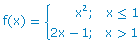 NOTA: Las f(x) derivables serán aquellas cuyas derivadas sean continuas es decir f´(x)=cont. => f(x) dvable |
lunes, 20 de octubre de 2014
Como hacer un comentario crítico PAU (L.C)
Link muy útil para aprender a hacer el resumen y el comentario crítico del examen de Lengua Castellana de la PAU, es un poco largo pero merece la pena¡
COMO HACER UN COMENTARIO CRÍTICO
COMO HACER UN COMENTARIO CRÍTICO
sábado, 11 de octubre de 2014
Repasar Biología
Para dar un repaso rápido de los temas de : La materia viva, Los glúcidos y Los lípidos; cuatro vídeos cortitos que ayudan bastante.
Química de la materia viva (vídeo prescindible)
Tema 1: El agua y las sales minerales
Tema 2: Los Glúcidos, pincha aquí.
Tema 3: Los Lípidos
Esquemas de los conceptos que necesitamos saber
BIOELEMENTOS, BIOMOLÉCULAS, AGUA Y SALES (T1)
GLÚCIDOS
LÍPIDOS
BIOELEMENTOS, BIOMOLÉCULAS, AGUA Y SALES (T1)
GLÚCIDOS
LÍPIDOS
jueves, 9 de octubre de 2014

lunes, 6 de octubre de 2014
CTMA Tema 1: Concepto de Medio Ambiente y Teoría de Sistemas
Documento descargable, 6 hojas, seguid el enlace y descargar ( escribid vuestro email si os lo piden)
Unidad 1 CTMA 2ºBACH
EJERCICIOS UNIDAD 1
Nota: El apartado introductorio de los modelos de sistemas (2.3) es info extra, mismo caso del apartado de "La Tierra como sistema". Por otra parte, falta hablar de las tasas de natalidad y moratlidad,etc.
Nota: El apartado introductorio de los modelos de sistemas (2.3) es info extra, mismo caso del apartado de "La Tierra como sistema". Por otra parte, falta hablar de las tasas de natalidad y moratlidad,etc.
APUNTES Y ESQUEMAS MORFOLOGÍA LENGUA
Todo lo que dimos hasta ahora de: Clasificación de palabras, adejativos, adverbios; fromación de palabras por derivación, composición, monema, fonema, morfema, etc En esquemas y apuntes muy bien expuestos.
Morfología básica En Apuntes
Esquemas


Morfología básica En Apuntes
Esquemas
sábado, 4 de octubre de 2014
jueves, 2 de octubre de 2014
miércoles, 1 de octubre de 2014
Entender valor absoluto en 2min
Explicación del concepto : valor absoluto
Puesta en práctica: Ecuaciones con valor absoluto ( saltar al min 6.45)


martes, 30 de septiembre de 2014
Tema 4 Historia de España : Vídeos y apuntes.
La Crisis del Antiguo Régimen (1788-1833)
1º fase de la Revolución Liberal. (1808-1814)
Absolutismo y Liberalismo 1814-1833
P.D: Para repasar el tema anterior podéis seguir este link: Antiguo Régimen
(personalmente los vídeos del tema 3 no me gustaron mucho)
jueves, 25 de septiembre de 2014
MAKE OR DO
1.
DO cuando hablamos de una actividad sin mencionar exactamente
cuál es:
|
- What's Marta doing? ¿Qué
está haciendo Marta?
- Are you doing anything special tonight? ¿Van a hacer algo en especial está noche?
- Are you doing anything special tonight? ¿Van a hacer algo en especial está noche?
2.
DO cuando hablamos de un trabajo o una tarea específica.Se
utiliza con la estructura DO + ING (ando, endo):
- Have you done your
homework yet? ¿Ya has hecho tus
deberes?
- It was a pleasure doing business with you. Fue un placer hacer negocios contigo.
- Could you do some photocopying for me, please? ¿Podrias hacerme unas fotocopias, por favor?
- It was a pleasure doing business with you. Fue un placer hacer negocios contigo.
- Could you do some photocopying for me, please? ¿Podrias hacerme unas fotocopias, por favor?
- I always do housework
on mondays. Siempre hago tareas domésticas los lunes
3.
Por lo general, MAKE tiene el significado
de crear, fabricar o construir.
- We made a
new design for the product based on suggestions. Hicimos
(Creamos) un nuevo diseño del producto basado en sugerencias.
- The company makes photographic equipment.
La empresa hace (fabrica) equipamiento fotográfico.
- The company makes photographic equipment.
La empresa hace (fabrica) equipamiento fotográfico.
4. MAKE se usa con sustantivos relacionados con la
conversación, los sonidos y los viajes:
CONVERSACION Y SONIDOS
make
a complaint, make an
enquiry, make a
noise, make a
remark
presentar un reclamo, hacer una consulta, hacer
ruido, hacer un comentario
VIAJES
make
a journey, make
a trip, make a visithacer
un traslado, hacer un viaje, hacer una visita[JOURNEY:
sólo desplazamiento de un lugar a otro; TRIP: incluye la estancia]
5.
A veces MAKE y DO pueden ser intercambiables:
- They made an
endurance test to the new Airbus double-decker. Le
realizaron una prueba de resistencia al nuevo Airbus doble-piso.
- They did an endurance test to the new Airbus double-decker. Le realizaron una prueba de resistencia al nuevo Airbus doble-piso.
- They did an endurance test to the new Airbus double-decker. Le realizaron una prueba de resistencia al nuevo Airbus doble-piso.
Existen muchas otras expresiones que no siguen pautas.
MAKE...
an
appointment, an
arrangement, an
attempt, a
choice, a profit
fijar una cita, establecer un acuerdo, hacer un intento, optar, obtener ganancia
a living, sense, certain, redundant, money, progress, friendsganarse la vida, tener sentido, asegurarse, despedir, hacer dinero, progresar,hacer amigos
a start, a suggestion, a decision, an investigation,iniciarse, ofrecer una sugerencia, tomar una decisión, realizar una investigación
,a speech,a mistake, a loss, a fuss
dar un discurso, cometer un error, generar una pérdida,armar un escándalo
fijar una cita, establecer un acuerdo, hacer un intento, optar, obtener ganancia
a living, sense, certain, redundant, money, progress, friendsganarse la vida, tener sentido, asegurarse, despedir, hacer dinero, progresar,hacer amigos
a start, a suggestion, a decision, an investigation,iniciarse, ofrecer una sugerencia, tomar una decisión, realizar una investigación
,a speech,a mistake, a loss, a fuss
dar un discurso, cometer un error, generar una pérdida,armar un escándalo
DO...
nothing, an
exam, research,
nacer nada, rendir un examen, investigar,
damage, harm, a job, duty
causar daño (material), causar daño (moral), realizar un trabajo,hacer tu deber
a favour, the typing, your best, well/bad
hacer un favor, tipear, hacer lo mejor posible, hacer bien/mal
nacer nada, rendir un examen, investigar,
damage, harm, a job, duty
causar daño (material), causar daño (moral), realizar un trabajo,hacer tu deber
a favour, the typing, your best, well/bad
hacer un favor, tipear, hacer lo mejor posible, hacer bien/mal
miércoles, 24 de septiembre de 2014
Voz Pasiva en los verbos de inglés
Active / Passive Verb Forms
Active Form
Most sentences are active.
[Thing doing action] + [verb] + [thing receiving action]
Examples:

Passive Form
You use the passive form to emphasize that the thing receiving the action is more important than the subject, or if you do not know who is doing the action
[Thing receiving action] + [be] + [past participle of verb] + [by] + [thing doing action]
Examples:

Active / Passive Overview
| Active | Passive | |
| Simple Present |
Once a week, Tom cleans the house.
|
Once a week, the house is cleaned by Tom.
|
| Present Continuous |
Right now, Sarah is writing the letter.
|
Right now, the letter is being written by Sarah.
|
| Simple Past |
Sam repaired the car.
|
The car was repaired by Sam.
|
| Past Continuous |
The salesman was helping the customer when the thief came into the store.
|
The customer was being helped by the salesman when the thief came into the store.
|
| Present Perfect |
Many tourists have visited that castle.
|
That castle has been visited by many tourists.
|
| Present Perfect Continuous |
Recently, John has been doing the work.
|
Recently, the work has been being done by John.
|
| Past Perfect |
George had repaired many cars before he received his mechanic's license.
|
Many cars had been repaired by George before he received his mechanic's license.
|
| Past Perfect Continuous |
Chef Jones had been preparing the restaurant's fantastic dinners for two years before he moved to Paris.
|
The restaurant's fantastic dinners had been being prepared by Chef Jones for two years before he moved to Paris.
|
| Simple Future will |
Someone will finish the work by 5:00 PM.
|
The work will be finished by 5:00 PM.
|
| Simple Future be going to |
Sally is going to make a beautiful dinner tonight.
|
A beautiful dinner is going to be made by Sally tonight.
|
| Future Continuous will |
At 8:00 PM tonight, John will be washing the dishes.
|
At 8:00 PM tonight, the dishes will be being washed by John.
|
| Future Continuous be going to |
At 8:00 PM tonight, John is going to be washing the dishes.
|
At 8:00 PM tonight, the dishes are going to be being washed by John.
|
| Future Perfect will |
They will have completed the project before the deadline.
|
The project will have been completed before the deadline.
|
| Future Perfect be going to |
They are going to have completed the project before the deadline.
|
The project is going to have been completed before the deadline.
|
| Future Perfect Continuous will |
The famous artist will have been painting the mural for over six months by the time it is finished.
|
The mural will have been being painted by the famous artist for over six months by the time it is finished.
|
| Future Perfect Continuous be going to |
The famous artist is going to have been painting the mural for over six months by the time it is finished.
|
The mural is going to have been being painted by the famous artist for over six months by the time it is finished.
|
| Used to |
Jerry used to pay the bills.
|
The bills used to be paid by Jerry.
|
| Would Always |
My mother would always make the pies.
|
The pies would always be made by my mother.
|
| Future in the Past Would |
I knew John would finish the work by 5:00 PM.
|
I knew the work would be finished by 5:00 PM.
|
| Future in the Past Was Going to |
I thought Sally was going to make a beautiful dinner tonight.
|
I thought a beautiful dinner was going to be made by Sally tonight.
|
martes, 23 de septiembre de 2014
Tabla periódica elementos
Si imprimís a doble cara la tabla con los elementos y sus pesos; y las valencias, os quedará una tabla periódica muy decente. Las imágenes de abajo son las tablas pero seguid el link para descargarlas.
Tabla periódica 1

Tabla periódica 2

Tabla periódica 2
lunes, 22 de septiembre de 2014
Soluciones Libro Quimica
Documento descargable (debería incluir el libro entero) seguir el link y decargar
Santillana-BACH-2-Quimica
Suscribirse a:
Comentarios (Atom)